Graph paper
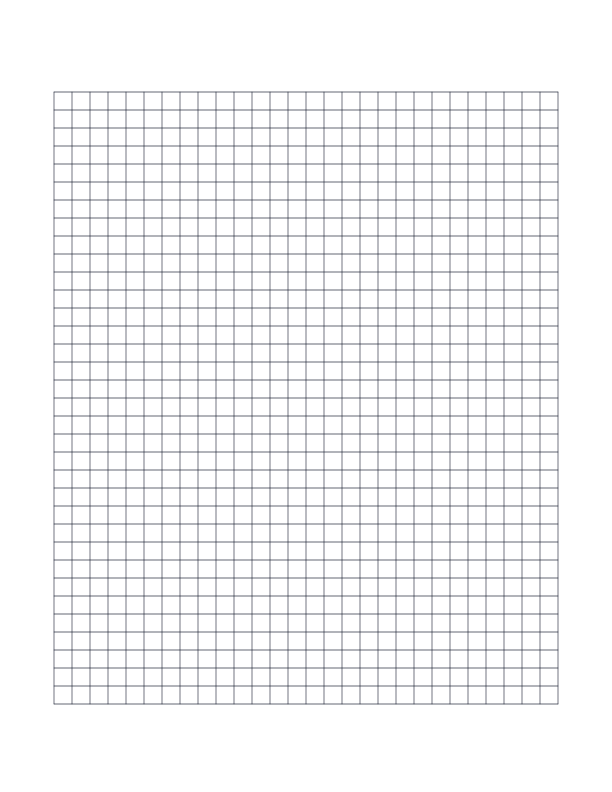
Choose a ¼-inch, ½-inch, 1 cm, or 5 mm grid. Add a bold line every five or ten squares.
 MathSheetHubGraph paper
Print templates for classroom demonstrations, written practice, and hands-on activities.
Choose a ¼-inch, ½-inch, 1 cm, or 5 mm grid. Add a bold line every five or ten squares.
MathSheetHubGraph paperUse evenly spaced dots to draw shapes, area models, and geoboard patterns.
MathSheetHubDot paper
Draw 3D shapes and structures made of unit cubes on an isometric grid.
MathSheetHubIsometric paper
Four-quadrant grids for plotting points and graphing equations.
MathSheetHubCoordinate planes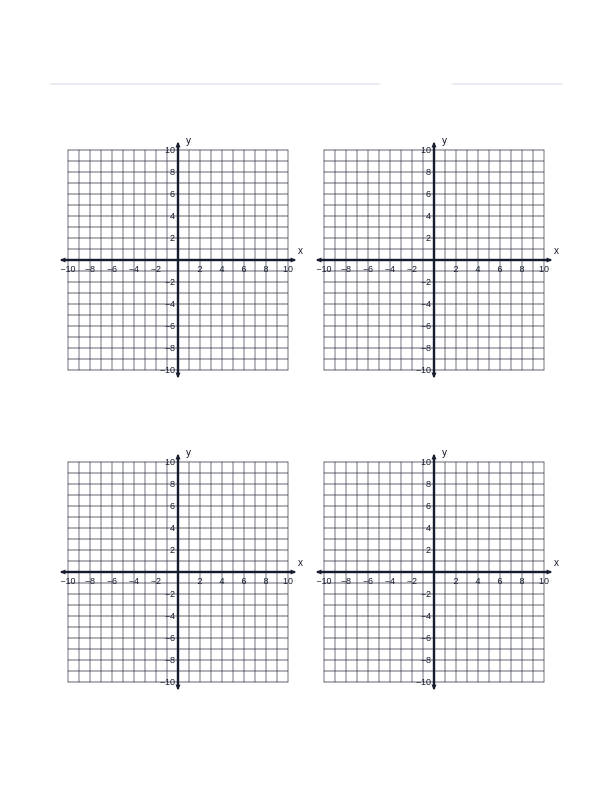
Draw counters in paired ten frames to represent numbers up to 20.
MathSheetHubDouble ten frames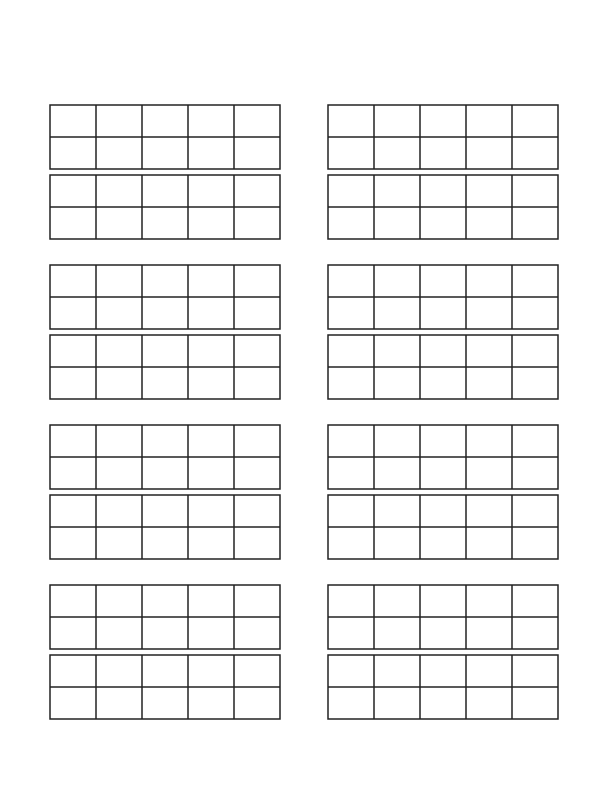
Write three related numbers in each triangle, then record four addition and subtraction or multiplication and division facts.
MathSheetHubFact family triangles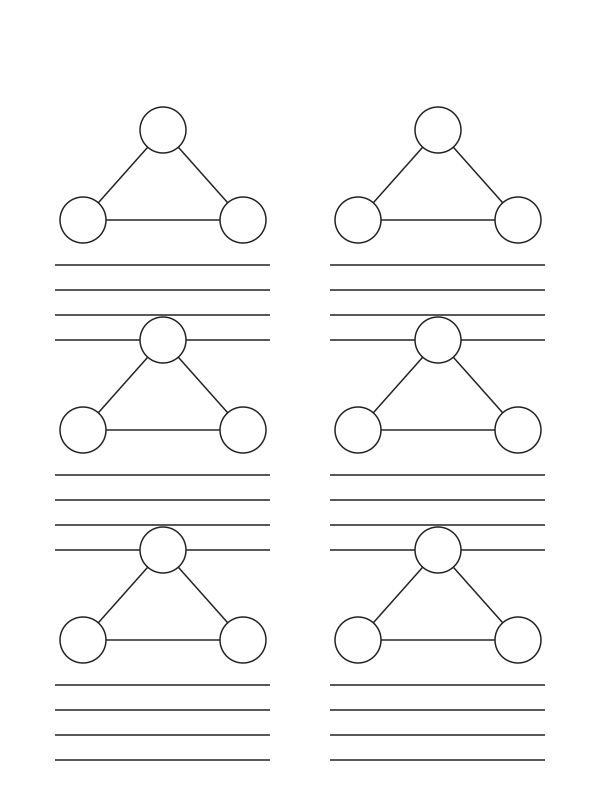
Print number lines for counting, comparing values, and practicing arithmetic.
MathSheetHubNumber lines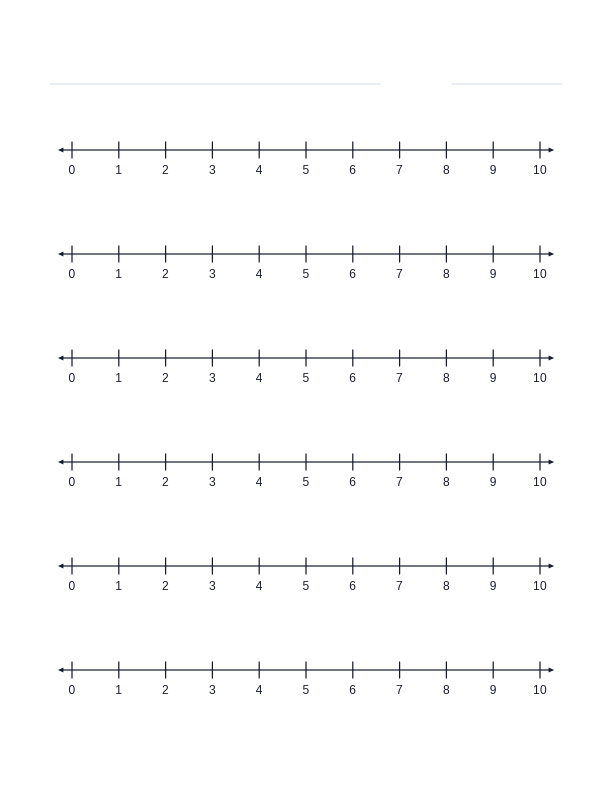
Compare fractions on number lines divided into equal parts.
MathSheetHubFraction number lines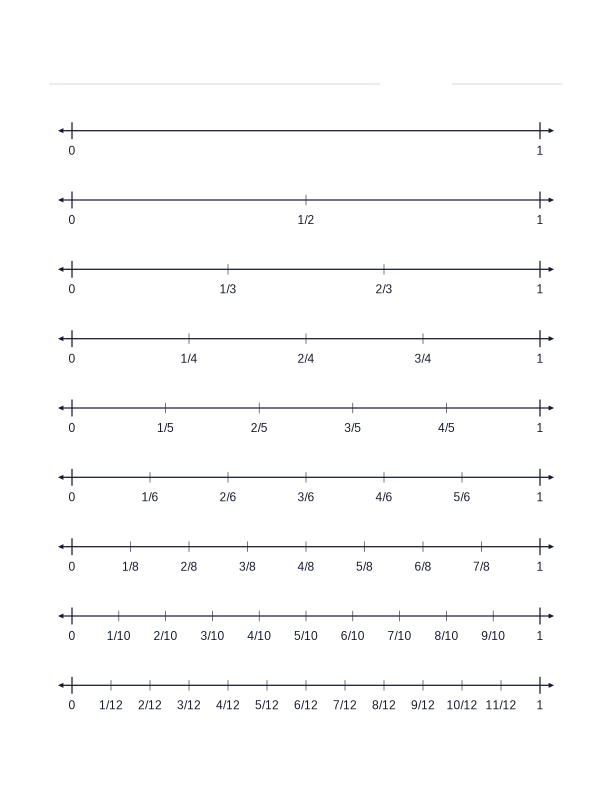
Compare equal parts with a fraction wall, or cut out the individual strips.
MathSheetHubFraction strips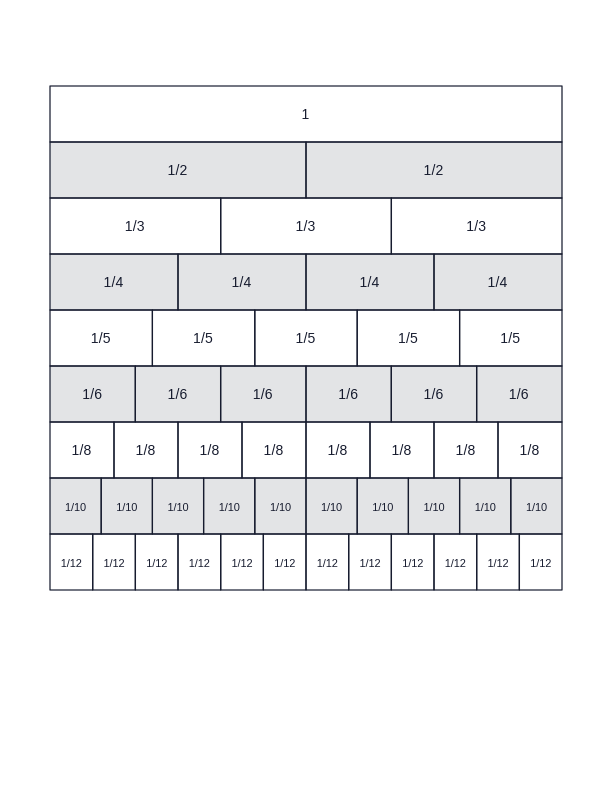
Print empty ten frames for counting and making ten with counters.
MathSheetHubTen frames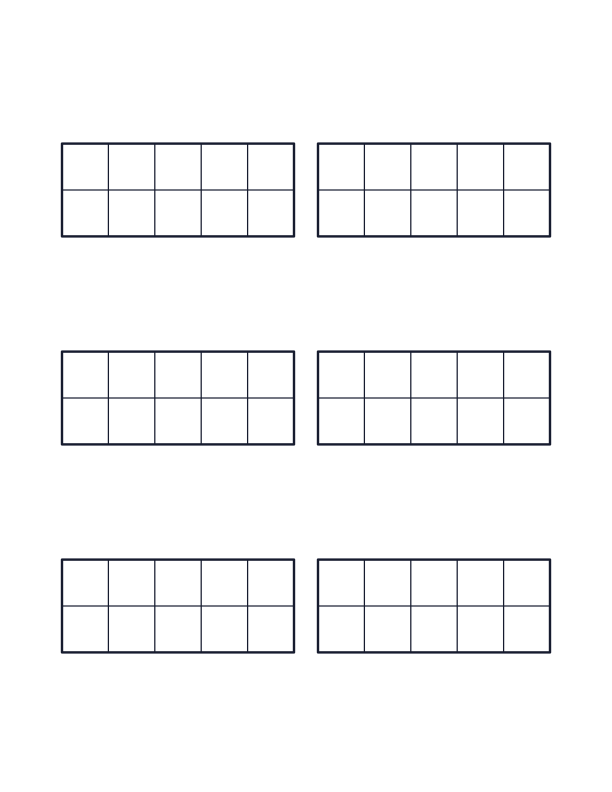
Blank 10 × 10 grids for representing decimals, fractions, and percentages.
MathSheetHubHundred grids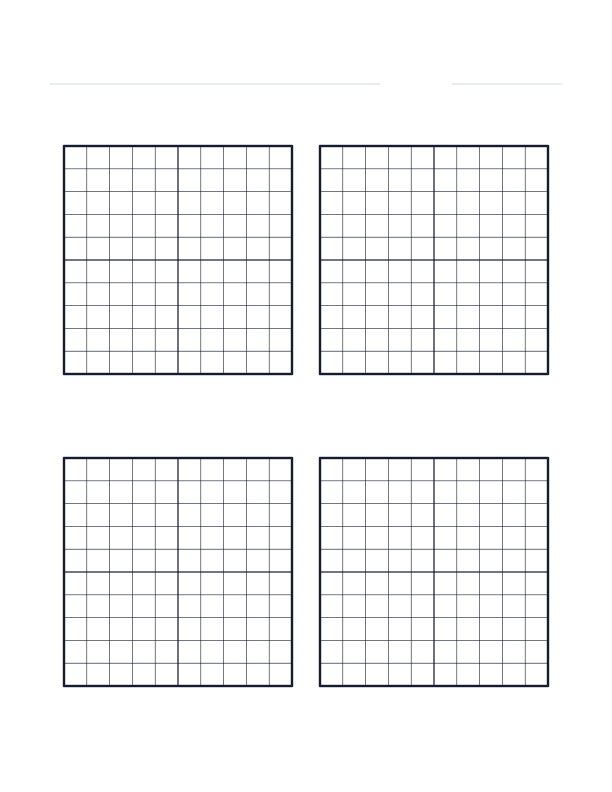
Use place-value area models to break multiplication into smaller products.
MathSheetHubArea model grids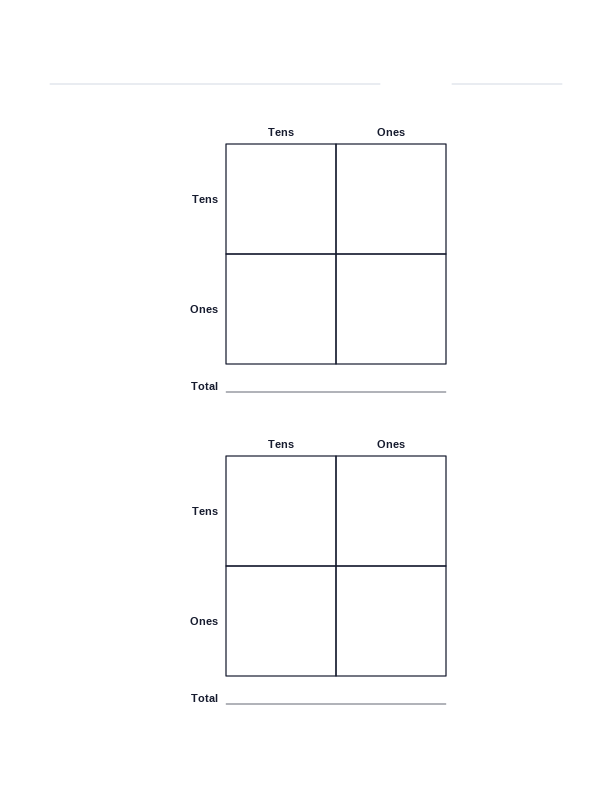
Draw hands on analog clocks and record the time below each clock.
MathSheetHubBlank clock faces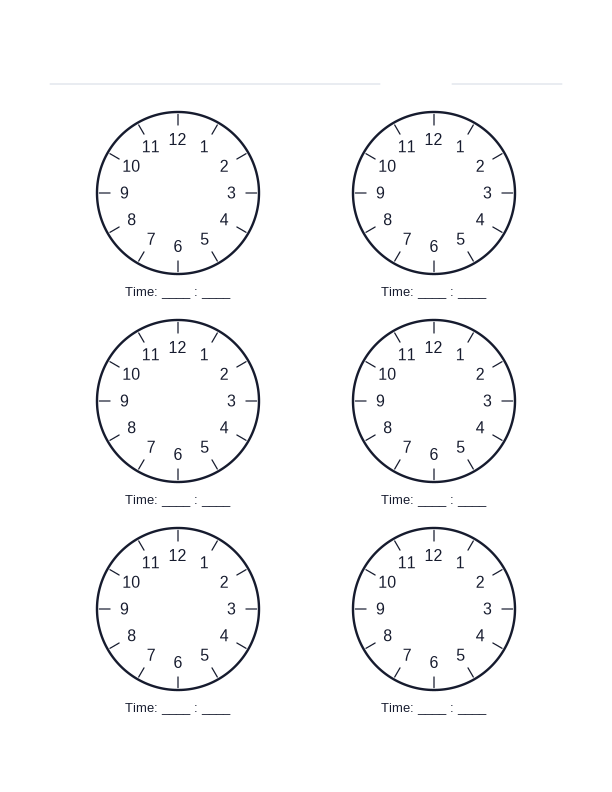
Sort pennies, nickels, dimes, and quarters, then record the total.
MathSheetHubU.S. coin mats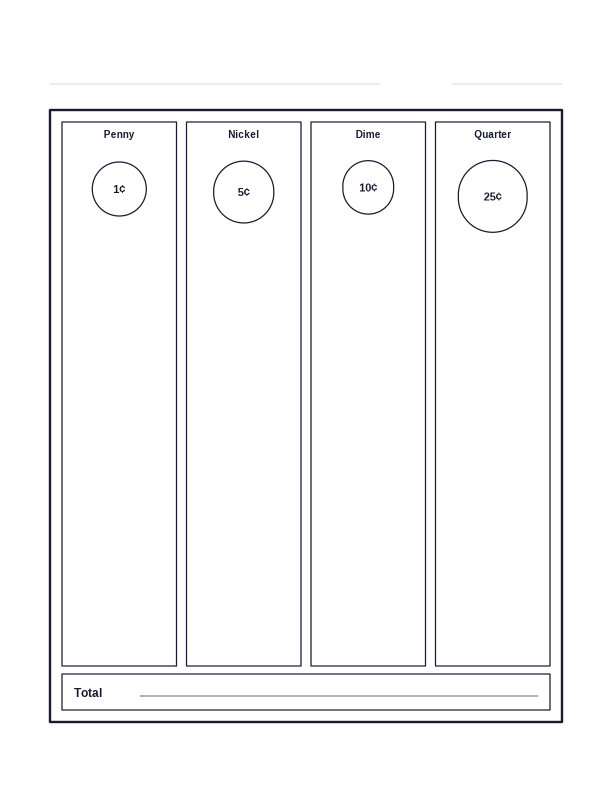
Practice labeling special angles and their coordinates on the unit circle.
MathSheetHubUnit circle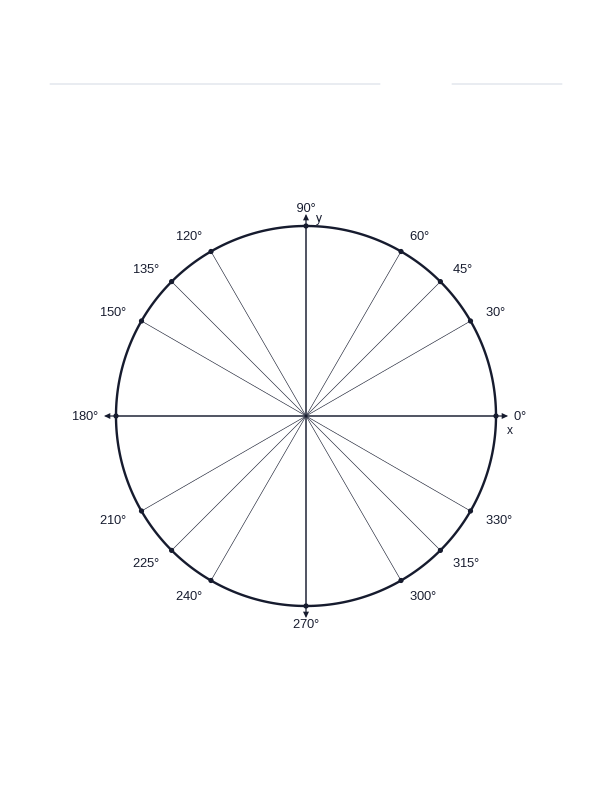
Print a semicircular protractor for measuring angles.
MathSheetHubProtractor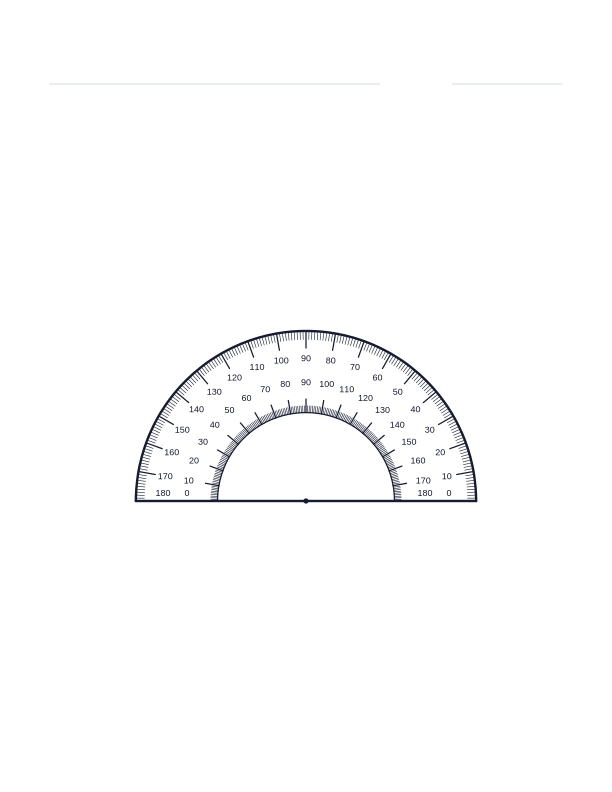
Use blank bars to show part-whole relationships and compare quantities.
MathSheetHubBar models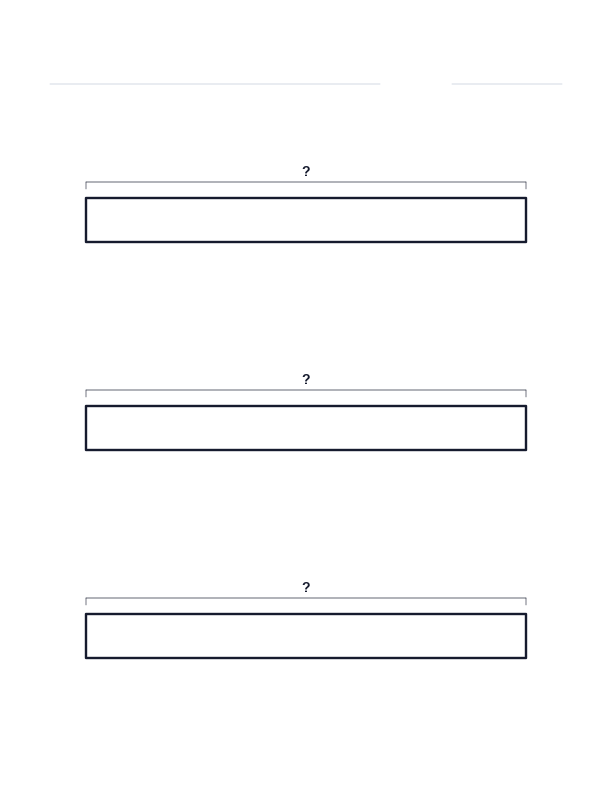
Use paired number lines to represent and compare proportional quantities.
MathSheetHubDouble number lines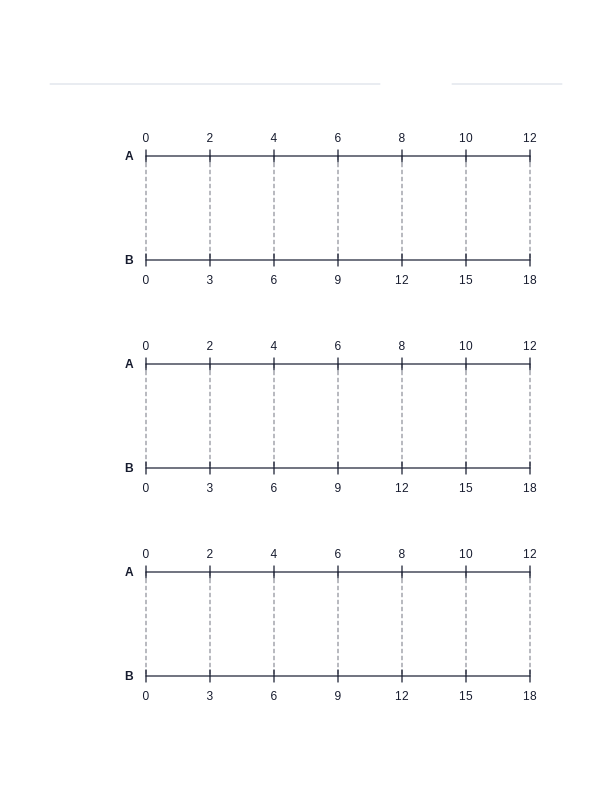
Complete tables of equivalent ratios using the given starting ratio.
MathSheetHubRatio tables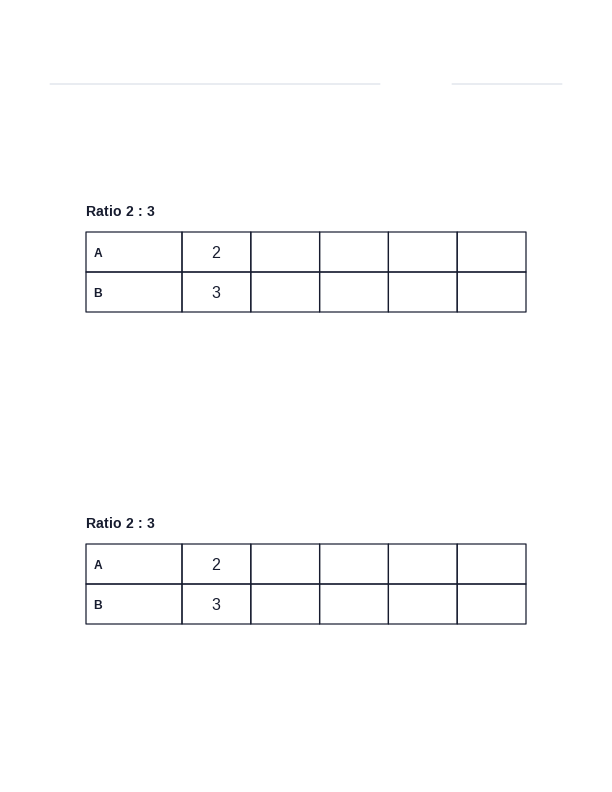
Cut out and fold flat nets to make three-dimensional shapes.
MathSheetHubNets of solids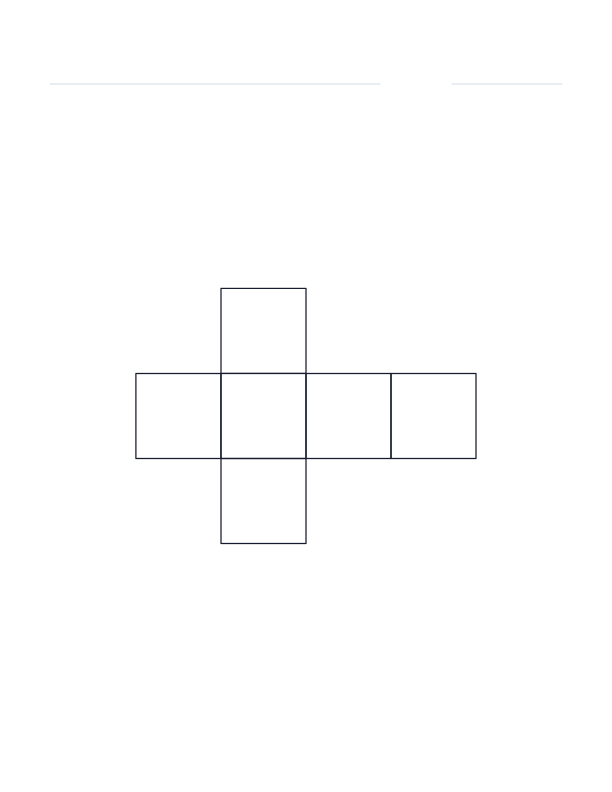
Compare equal parts of circles to model fractions.
MathSheetHubFraction circles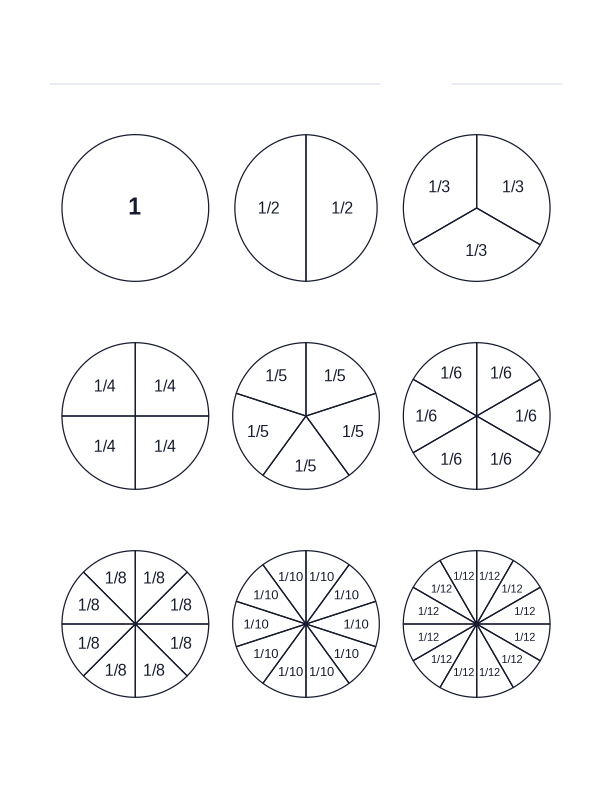
Use part-part-whole diagrams to show how numbers can be composed or split.
MathSheetHubNumber bonds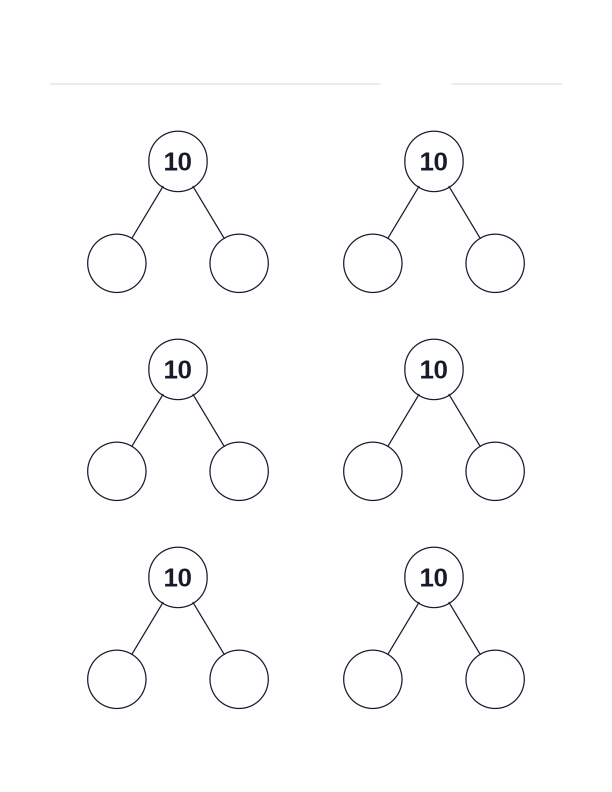
Cut out unit squares, tens rods, and hundreds flats for place-value practice.
MathSheetHubBase-ten blocks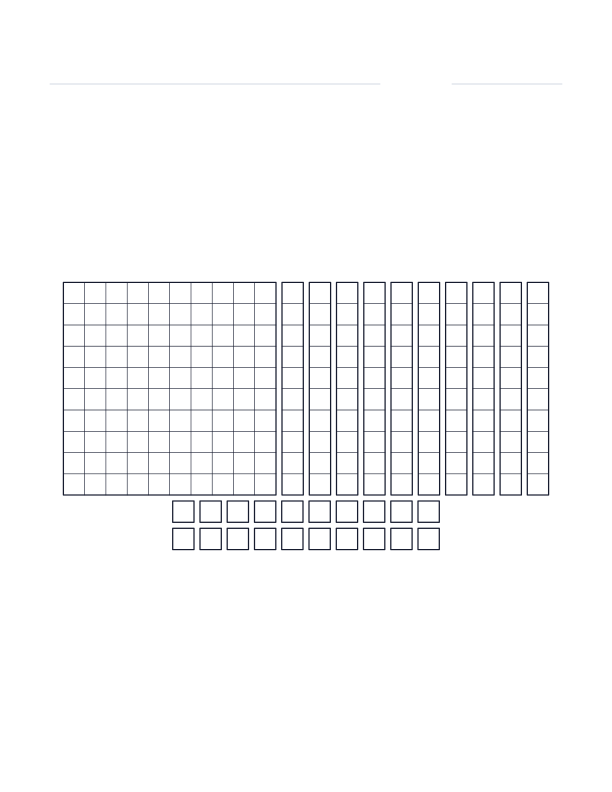
Print cut-out rulers with inch and centimeter scales.
MathSheetHubRulers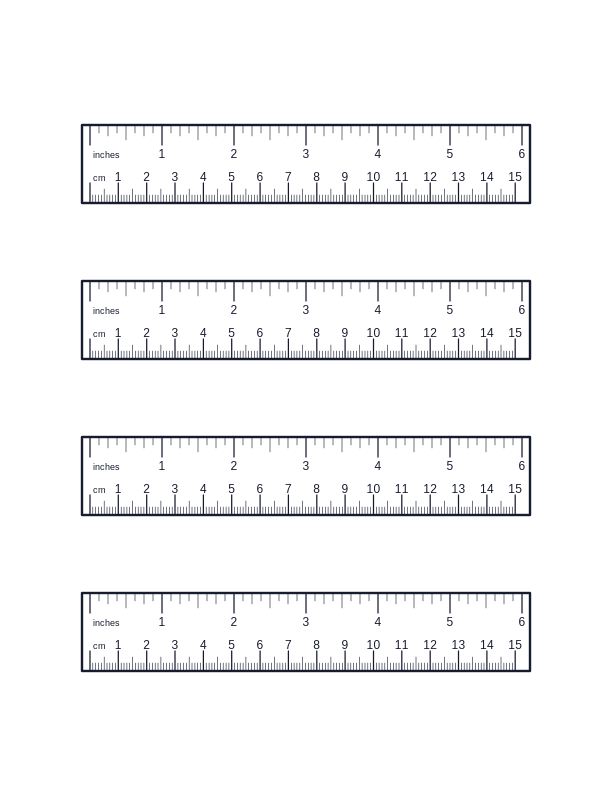
Write a function rule and record the matching inputs and outputs.
MathSheetHubFunction input-output tables
Label the number line and stack dots or X marks to show how often each value occurs.
MathSheetHubLine plot paper
Label the categories and use the blank grid to show counts.
MathSheetHubBar graph
Use a number chart to practice counting, skip counting, and identifying patterns.
MathSheetHubHundreds chart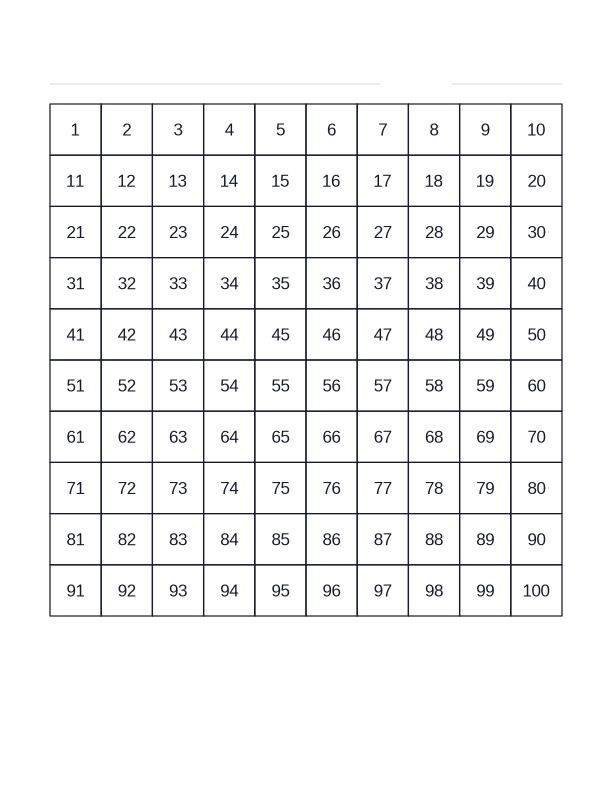
Use a grid to practice or look up multiplication facts.
MathSheetHubMultiplication chart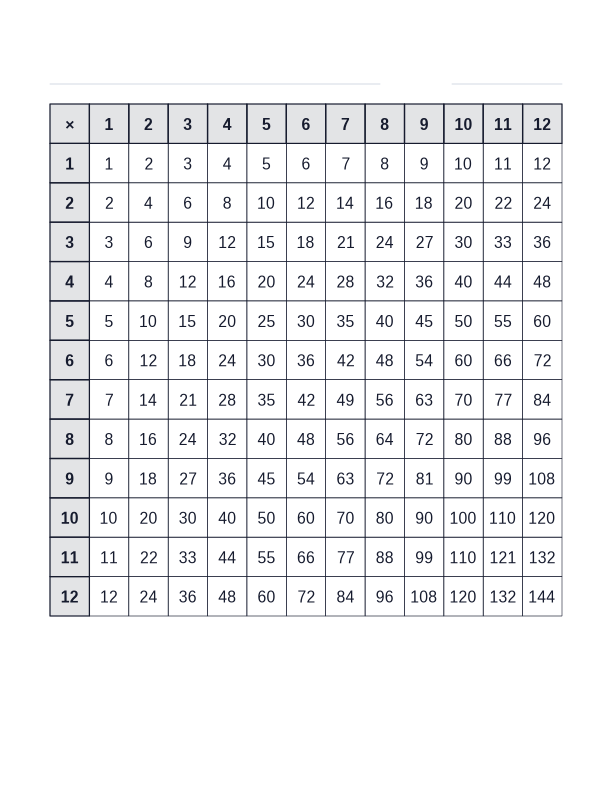
Record digits in the thousands, hundreds, tens, and ones columns.
MathSheetHubPlace-value chart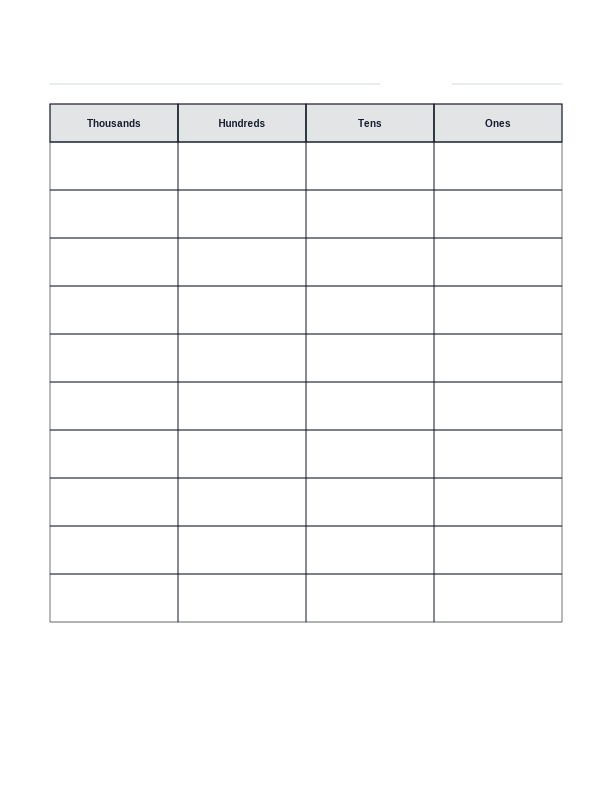
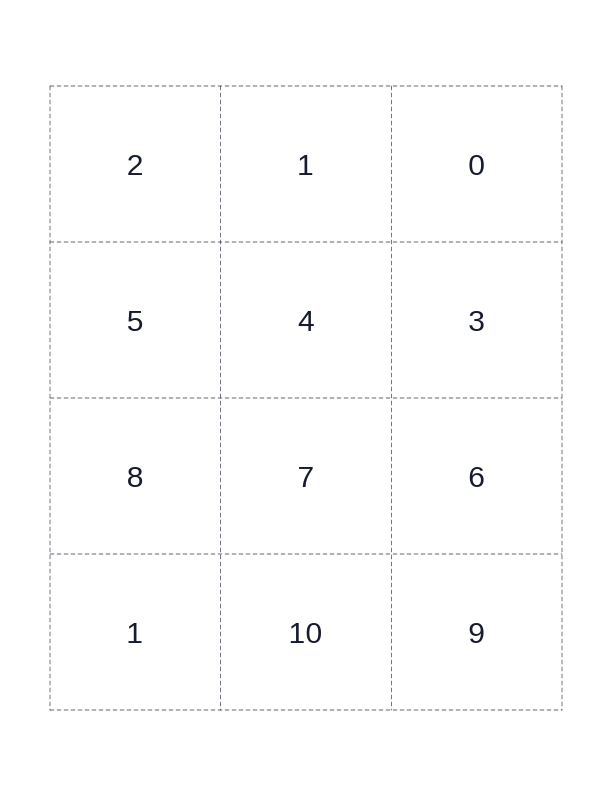
Print addition fact cards and their matching answers.
MathSheetHubAddition flash cards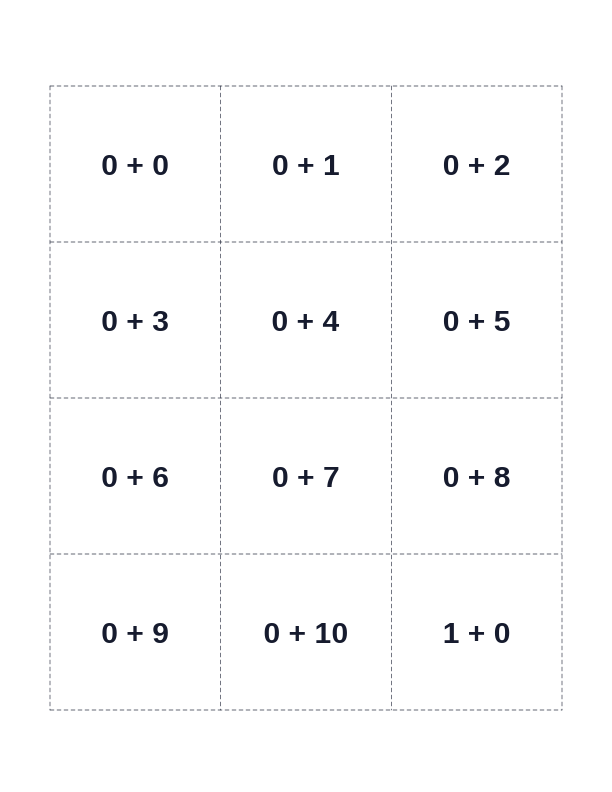 MathSheetHubAddition flash cards
Print subtraction fact cards and their matching answers.
Page 1 has the questions. Page 2 has the answers. Print double-sided and flip on the long edge to align the cards.
MathSheetHubSubtraction flash cards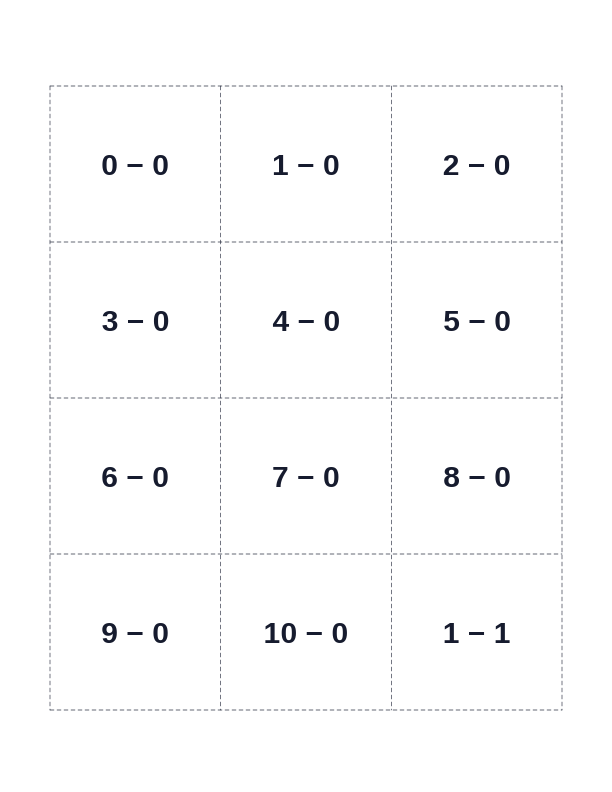 MathSheetHubSubtraction flash cards
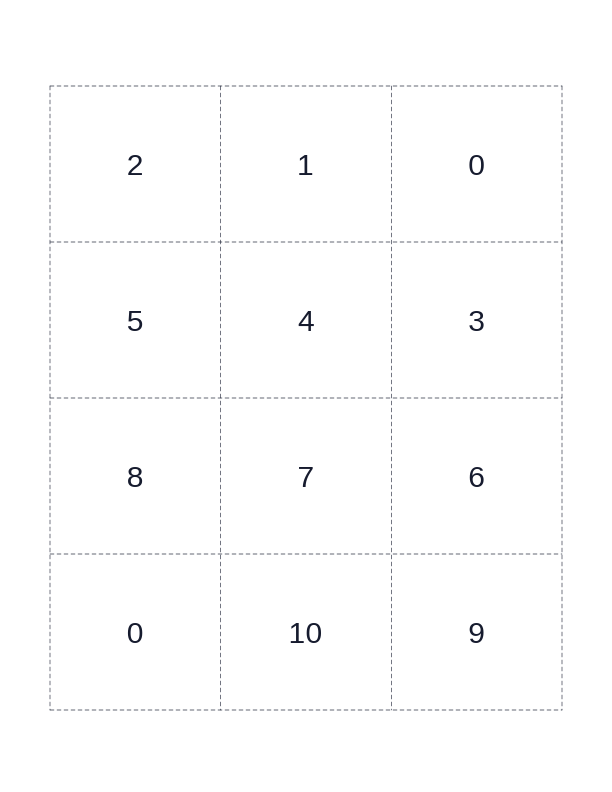
Print multiplication fact cards and their matching answers.
MathSheetHubMultiplication flash cards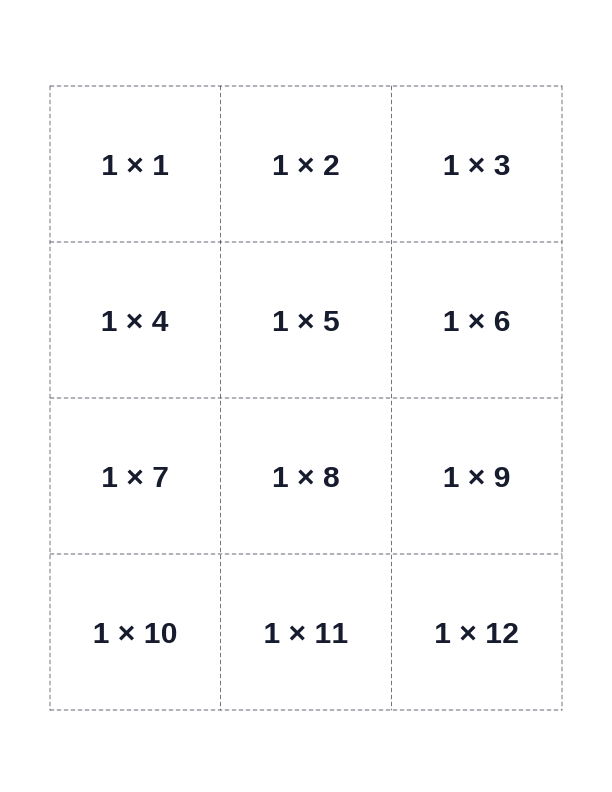 MathSheetHubMultiplication flash cards
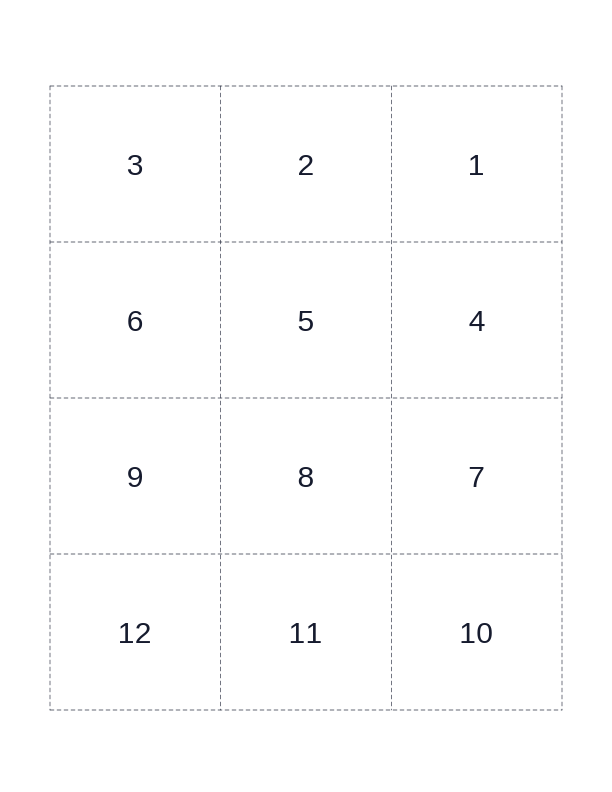
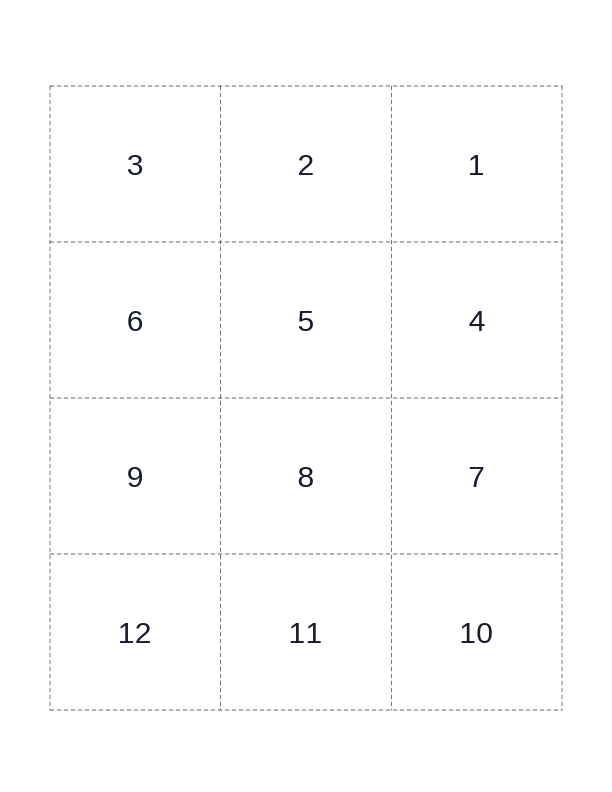
Print division fact cards and their matching answers.
MathSheetHubDivision flash cards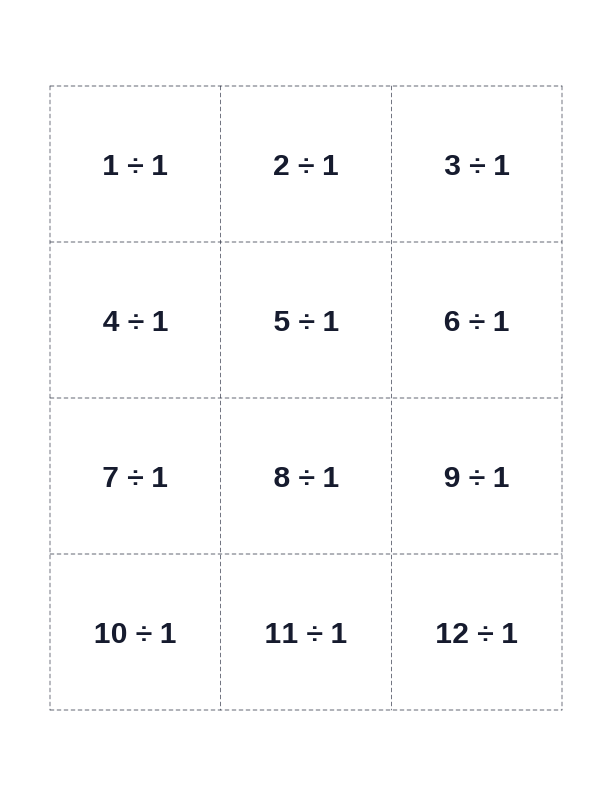 MathSheetHubDivision flash cards
Cut out the seven pieces and rearrange them to make new shapes.
MathSheetHubTangram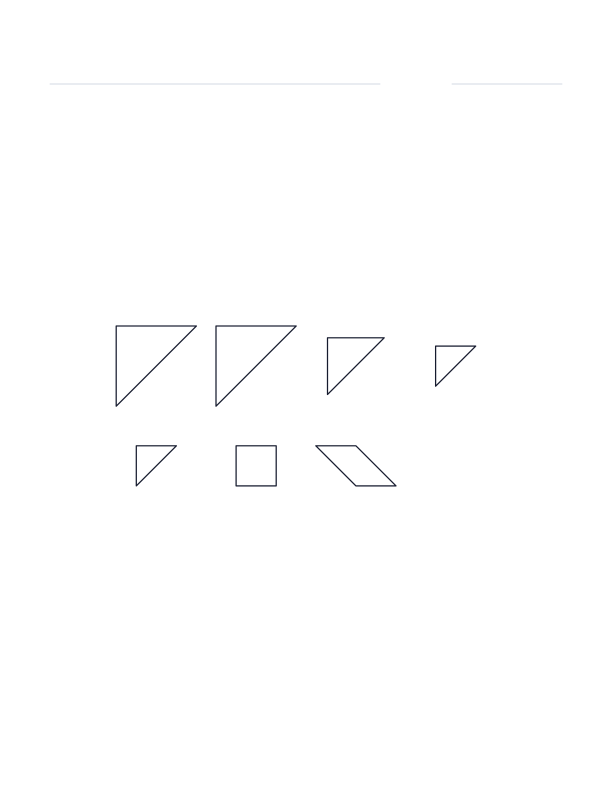
Fill the grid so that digits do not repeat in a row, column, or box.
MathSheetHubSudoku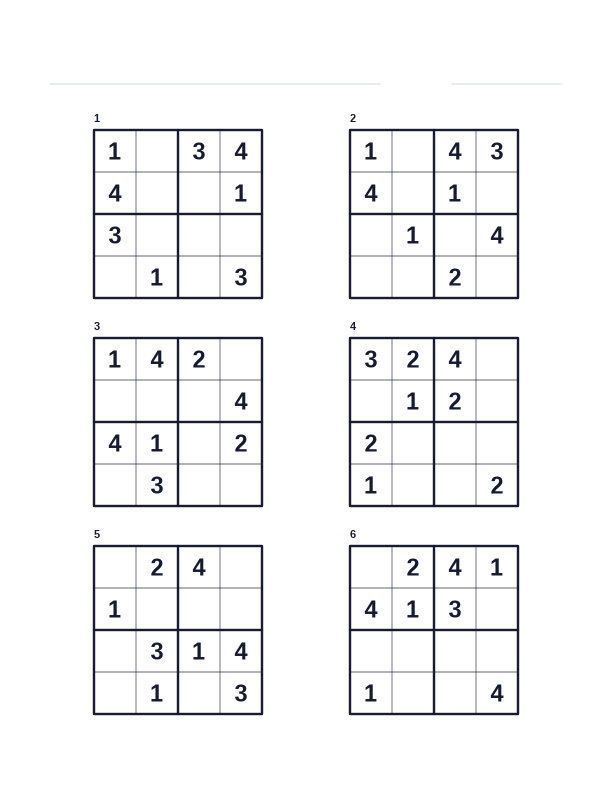
Find 14 English geometry terms in a 12 × 12 letter grid.
MathSheetHubGeometry word search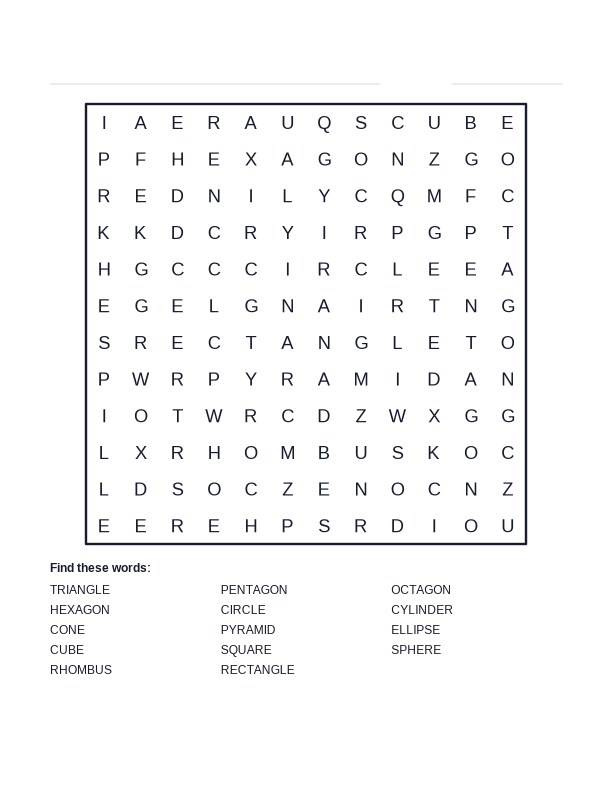
Fill in the missing numbers so each row, column, and diagonal has the same sum.
MathSheetHubMagic squares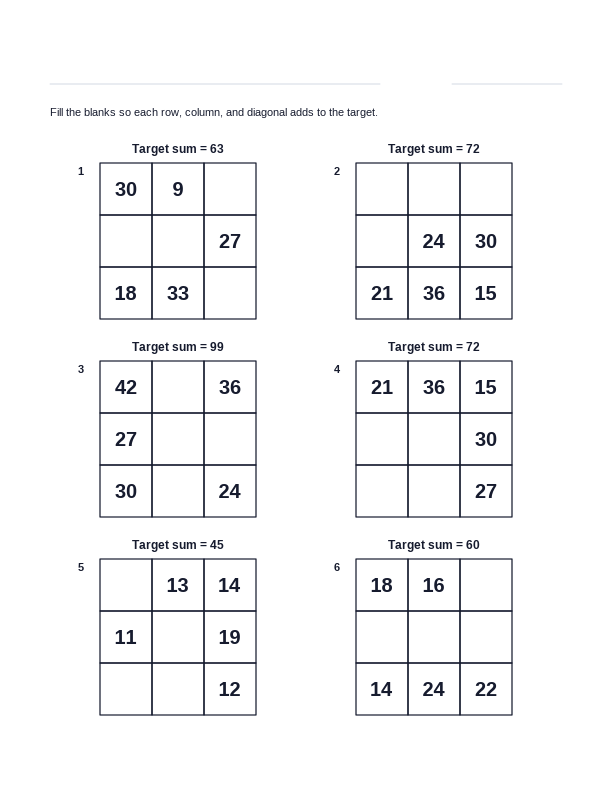
Sort numbers into a Venn diagram by whether they are multiples of two, three, or both.
MathSheetHubVenn diagram sorting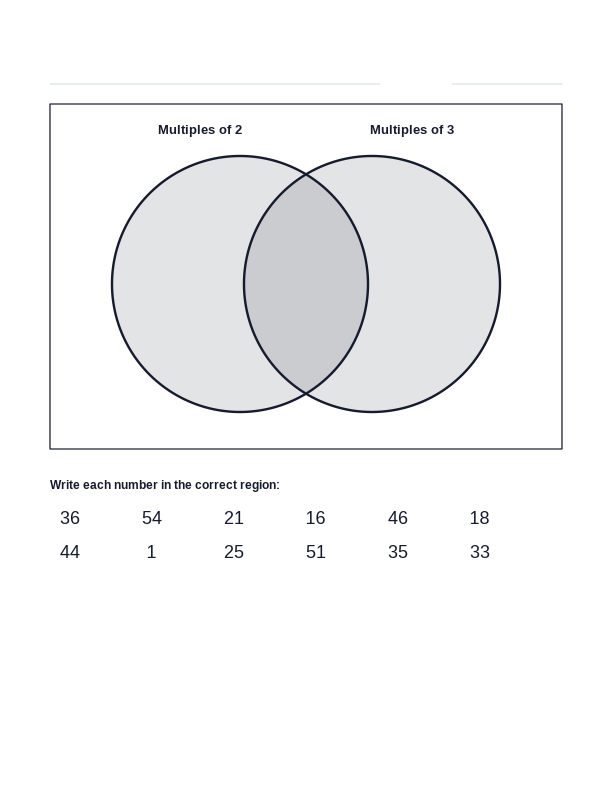
Print bingo cards with a free center square for a group game.
MathSheetHubBingo cards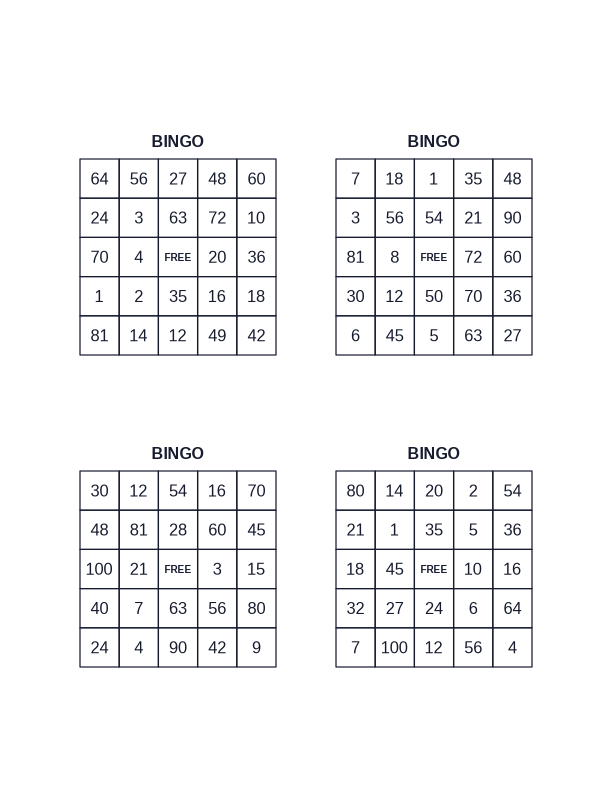
Fill each row and column without repeats. Use the operation in each cage to reach its target.
MathSheetHubArithmetic grid puzzles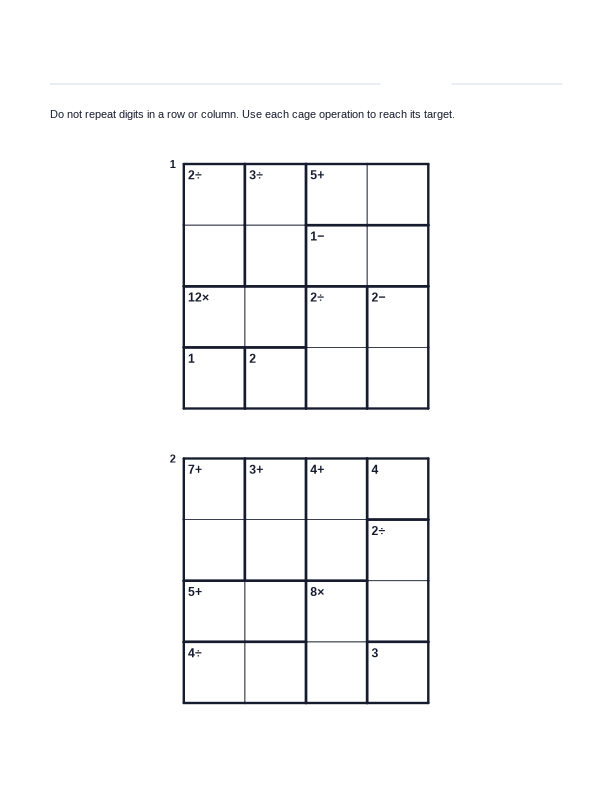
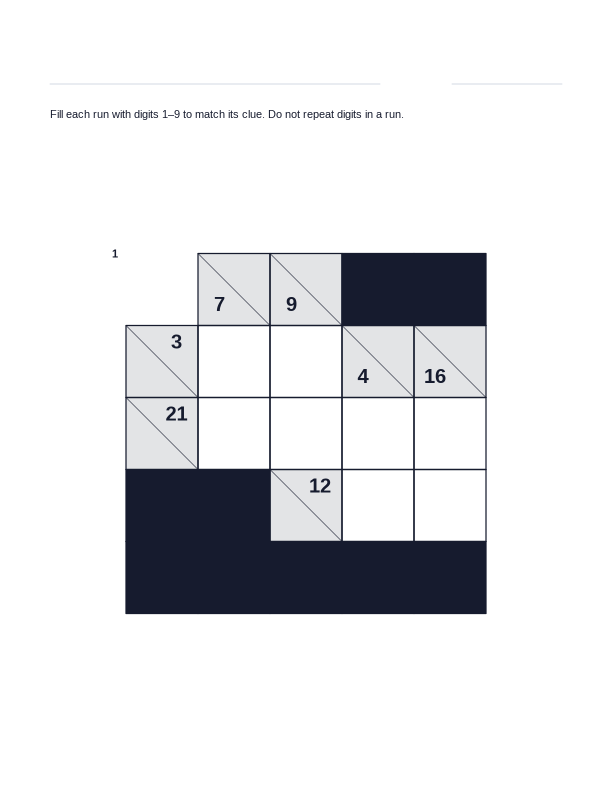
Use digits 1 through 9 to match the clues, without repeating a digit in a run.
MathSheetHubKakuro sum puzzles